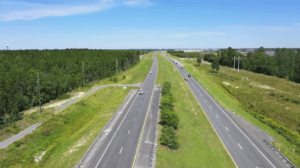
From a shared community vision to a $200,000 investment, the Freeport Gateway Landscape Project demonstrates how thoughtful planning, strategic partnerships, and community pride can help preserve the character of a growing city.
Every community tells a story long before you reach its downtown.
Sometimes that story is written in historic buildings. Sometimes it’s found beneath the shade of towering oaks or along a waterfront that has shaped generations. And sometimes, it begins with something as simple as the drive into town.
For Freeport, Florida, the entrance along U.S. Highway 331 is more than a stretch of roadway. It is a first impression for residents returning home, visitors discovering the city, and businesses considering where to invest.
As one of Walton County’s fastest-growing communities, Freeport faces an important opportunity: How can a city embrace new growth while protecting the character, natural beauty, and sense of place that make it special?
The 331 North Gateway Project is helping answer that question.
Through a partnership involving Scenic Walton, the City of Freeport, the Florida Department of Transportation (FDOT), The St. Joe Community Foundation, and Ruppert Landscape, a vision for a more welcoming and thoughtfully designed entrance into Freeport is moving closer to reality.
And thanks to a recently awarded $100,000 FDOT Highway Beautification Grant, the project now has $200,000 in committed funding to bring its first phase to life.
But the significance of this project extends far beyond landscaping.
A Gateway That Reflects Freeport’s Identity
Freeport occupies a unique position in Walton County. Located along U.S. Highway 331, the city serves as an important connection between North Walton and the beaches and communities of South Walton.
For thousands of residents, commuters, and visitors, the corridor is part of their daily experience. It is also one of the first opportunities to introduce people to Freeport’s identity.
“The City of Freeport is the literal gateway to the central and south areas of Walton County,” said Latilda Hughes-Neel, AICP, Planning Director for the City of Freeport. “It is important that the initial entrance to the City be thoughtfully and appropriately presented as a community that cares about quality of life.”
That philosophy is central to the Gateway Project.
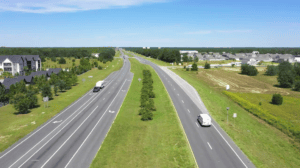
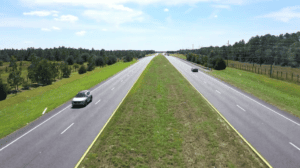
When completed, the project will introduce thoughtfully designed landscaping and median improvements along the U.S. 331 corridor, creating a more attractive and welcoming entrance while supporting roadway safety and improved stormwater management.
The improvements are intended to do more than enhance the appearance of a busy highway. They will help establish a sense of arrival, communicate community pride, and reinforce Freeport’s commitment to thoughtful development.
“Thoughtful landscaping and signage set the tone for the initial reaction and experience newcomers have to our area,” Hughes-Neel explained. “Freeport’s history and culture are rooted in its relationship to the water and the land.”
Turning a Community Vision Into a Funded Project
Meaningful community improvements rarely happen overnight. They require a shared vision, dedicated leadership, and partners willing to invest the time and resources necessary to move an idea forward.
The Freeport Gateway Landscape Project is a powerful example of that process.
The effort began when Scenic Walton collaborated with Freeport Planning Director Latilda Hughes-Neel and the Freeport City Council to identify a location where gateway enhancements could make a meaningful difference.
Through Scenic Walton’s Walton Safe & Beautiful Program, funding from The St. Joe Community Foundation supported the development of the original landscape design by Sean Daly and Ruppert Landscape.
That initial investment provided something essential: a tangible vision that community leaders could evaluate, support, and advance.
In 2024, the Freeport City Council committed $100,000 toward installation of the project, establishing a financial foundation for its first phase.
Recognizing an opportunity to build upon that commitment, Scenic Walton subsequently encouraged the City to pursue funding through FDOT’s Highway Beautification Grant Program. Scenic Walton also helped secure letters of support, while the original landscape design provided the foundation for the City’s successful grant application.
The result was an additional $100,000 award from FDOT, effectively doubling the funding available for the project’s first phase.
What began as a shared vision is now a $200,000 investment in Freeport’s future.
The milestone illustrates the impact of strategic collaboration. By bringing together municipal leadership, nonprofit advocacy, philanthropic support, professional design expertise, and state funding, the partners were able to advance a project that might otherwise have remained an idea.
Why Beautification Is About More Than Appearance
It’s easy to look at a landscaped median and see trees, shrubs, and flowers.
But well-planned public spaces can contribute to something much larger: how a community functions, how people experience it, and how residents feel about the place they call home.
For the Freeport Gateway Project, the anticipated benefits include several important priorities.
- A stronger sense of place. Thoughtful landscaping can create a recognizable entrance that celebrates Freeport’s identity and distinguishes the city from surrounding communities.
- Improved roadway safety. Carefully planned median enhancements can support a more organized roadway environment while complementing existing transportation infrastructure.
- Better stormwater management. Landscaping and associated design improvements can help address stormwater considerations along the corridor.
- Community pride. Attractive, well-maintained public spaces communicate that a community values its appearance, its residents, and its future.
- Economic opportunity. A welcoming, thoughtfully planned gateway can contribute to a positive impression among visitors, prospective businesses, and investors.
For Bill Blanken, President of the Freeport Merchants Association and a longtime Freeport resident, those benefits are closely connected.
“A well-designed gateway shows pride, encourages private investment, supports local businesses, and sends a message that Freeport is a community that is prepared for opportunity,” Blanken said.
His perspective reinforces an important principle: community beautification and economic development do not have to be separate conversations.
Investments in public spaces can complement investments in local businesses, infrastructure, and neighborhood quality of life.
Growing Without Losing What Makes Freeport Special
As Freeport continues to develop, community leaders are increasingly focused on ensuring that growth reflects the city’s history and values.
Its identity has long been shaped by the surrounding waterways, natural landscapes, and generations of residents whose lives and livelihoods are connected to the land.
Hughes-Neel noted that the City has protected trees, lakes, rivers, and Choctawhatchee Bay through its land-use regulations for many years.
The area’s old-growth trees, for example, represent more than natural beauty. They are part of Freeport’s distinctive Old North Florida landscape, historically providing shade, anchoring soil, and contributing to the character of the community.
The City has also established protections for waterfront areas and expanded development regulations along U.S. 331, including corridor standards addressing service roads, multimodal pathways, and access management.
These policies recognize the importance of planning for future transportation needs while protecting the qualities that make Freeport unique.
The Gateway Project is a visible extension of that philosophy.
For Blanken, protecting community identity is essential to ensuring that economic growth benefits Freeport rather than changes it beyond recognition.
“Growth does not mean we have to become another community that loses its identity in the process,” he said.
That sentiment captures one of the project’s most important messages.
Freeport doesn’t have to choose between progress and preservation.
It can welcome new businesses, create economic opportunities, improve infrastructure, and accommodate new residents while maintaining the small-town character and sense of community that have defined it for generations.
As Blanken explained, “Strong economic growth and community identity go hand in hand.”
The Power of Partnerships in Walton County
Perhaps the most compelling part of the 331 North Gateway Project is not what will eventually be planted along the roadway, but how the project came together.
Each partner brought a different resource or perspective to the effort.
Scenic Walton helped initiate and advance the vision through its Walton Safe & Beautiful Program, supporting the original design and advocating for additional funding.
The City of Freeport, including Planning Director Latilda Hughes-Neel and the Freeport City Council, provided planning leadership, local support, and the initial $100,000 installation commitment.
The St. Joe Community Foundation made the original design possible through its financial support.
Sean Daly and Ruppert Landscape translated the vision into a landscape design that could serve as the foundation for implementation and grant funding.
And FDOT’s $100,000 Highway Beautification Grant provided a critical additional investment.
Together, these contributions demonstrate how collaboration can turn individual resources into a larger community benefit.
“When there’s a worthwhile goal, we work together to get it done,” Blanken said. “Government, local businesses, civic organizations, and community leaders each have a role, and when they work in partnership, we accomplish more than any one group could alone.”
For Scenic Walton, that collaborative approach is central to its mission of protecting and enhancing the scenic beauty, safety, and quality of life of Walton County.
The Gateway Project demonstrates how those priorities can translate into tangible improvements that residents and visitors will experience for years to come.
A First Step Toward an Even More Beautiful Freeport
While the first phase of the Gateway Project represents a significant milestone, the broader opportunity is what it could inspire.
A successful gateway improvement can establish momentum for future beautification efforts, encourage additional public and private investment, and reinforce the importance of thoughtful community planning.
Hughes-Neel expressed her hope that the effort will be the beginning of additional partnerships between the City, Scenic Walton, and other community organizations.
“It is my hope that this is the first of several collaborative projects with Scenic Walton et al.,” she said.
Blanken shares that ambition, envisioning a community that continues investing not only in beautification, but also in infrastructure, local businesses, job creation, and economic opportunity.
“Most importantly, I hope this project reminds us that economic growth and preserving our identity are not competing priorities,” he said.
That vision is particularly meaningful for a community experiencing significant change.
The decisions made today about infrastructure, public spaces, natural resources, and community design will influence how Freeport looks, feels, and functions for generations.
The 331 North Gateway Project represents one of those decisions.
Someday, the landscaped medians and gateway improvements will simply become part of the everyday scenery. Residents will pass them on their way to work. Families will drive by on their way home. Visitors will experience them as their introduction to Freeport.
Many may never know the years of planning, collaboration, and advocacy that made the improvements possible.
But they will experience the result.
And that is ultimately what makes projects like this so meaningful.
The true legacy of the 331 North Gateway Project won’t simply be a more beautiful roadway. It will be a community that chooses to grow with purpose, invest in its identity, and create a welcoming first impression that reflects the place its residents are proud to call home.
Because a gateway does more than welcome people into a city.
It tells them what that community values.
And Freeport is making sure its story begins with pride, partnership, and a vision for the future.
Help Shape a More Scenic Walton County
The Freeport Gateway Landscape Project is one example of how Scenic Walton works alongside local governments, community organizations, businesses, and residents to protect and enhance the places that make Walton County special.
From roadway beautification and pedestrian safety to scenic preservation and thoughtful community planning, meaningful progress begins with people who care about the future of their communities.
Stay informed about projects like this and discover how you can help shape Walton County’s future. Sign up for Scenic Walton’s email updates.