Placemaking spotlight: Olympia, Washington
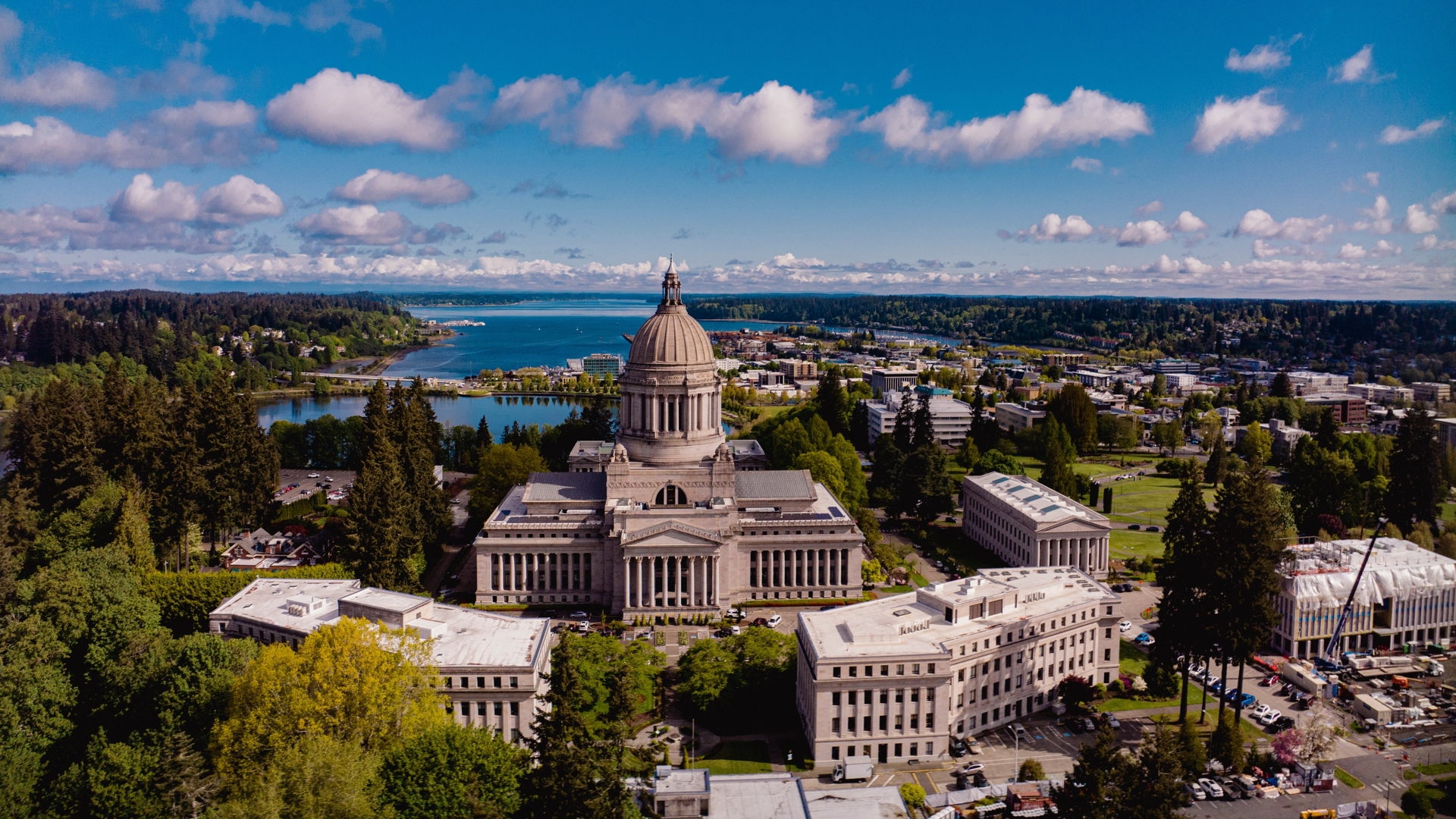
Olympia protects the views and culture that make it lovable
Olympia, Washington, is a city of only 55,733, but its small population has big character. It is a charmingly funky city, and its residents are proud of their unique culture, arts scene, and stunning views. Olympia also is a resilient city, having faced earthquakes and economic stagnation, through which the city has grown and adapted.
The town was officially established in 1850 and named Olympia because of its stunning views of the Olympic Mountains. Olympia was laid out in the traditional New England style, with a town square and tree‑lined streets.
During the 1850s, the settler population grew, and businesses such as stores, hotels, brickyards, and docks developed. This growth was accelerated by steamboats that used nearby Puget Sound as a water highway to move products, people, and mail. Olympia grew around the bustling waterfront and became a maritime commerce hub.
Throughout the 20th century, Olympia saw great growth as state government and the economy developed, and the population increased. During this period, the city became a center of lumber processing, and 22 blocks were added to downtown.
However, the city faced many challenges in the following decades. In 1949, an earthquake destroyed many historic downtown buildings. The city quickly rebuilt, and downtown is now a charming mix of contemporary, midcentury, and historic architecture. Another challenge occurred in the 1950s and ’60s, when Olympia experienced a loss of waterfront industry as changing markets led to the closing of many mills. However, the late 1960s brought revitalization with the establishment of The Evergreen State College, which enlivened Olympia’s cultural, political, and social life. The city became a hub for art, music, social justice, and environmental activism.
Since then, Olympia has continued to grow and develop as a charming, artsy, and politically active place. Its residents are passionate about their city’s well‑being and character, and city government is committed to maintaining that unique cultural and scenic identity. Marygrace Goddu, Inspire Olympia program manager, says the city’s goal is to be both “lovable and livable,” meaning that the city should be beautiful and well cared for while remaining a place where residents can afford to live in their communities.
Olympia is best known by residents and tourists for its iconic Capitol dome and incredible views of Mount Rainier and the Olympic Mountains. To protect access to these scenic views, the city planning office has implemented zoning measures. Building height restrictions and design requirements apply on certain blocks where development could impede views of the dome or mountains. Designs on the west sides of some buildings also must enhance the natural scenery. According to Principal Planner Joyce Phillips, these measures are essential to preserving the unique and stunning landscape that makes Olympia special.
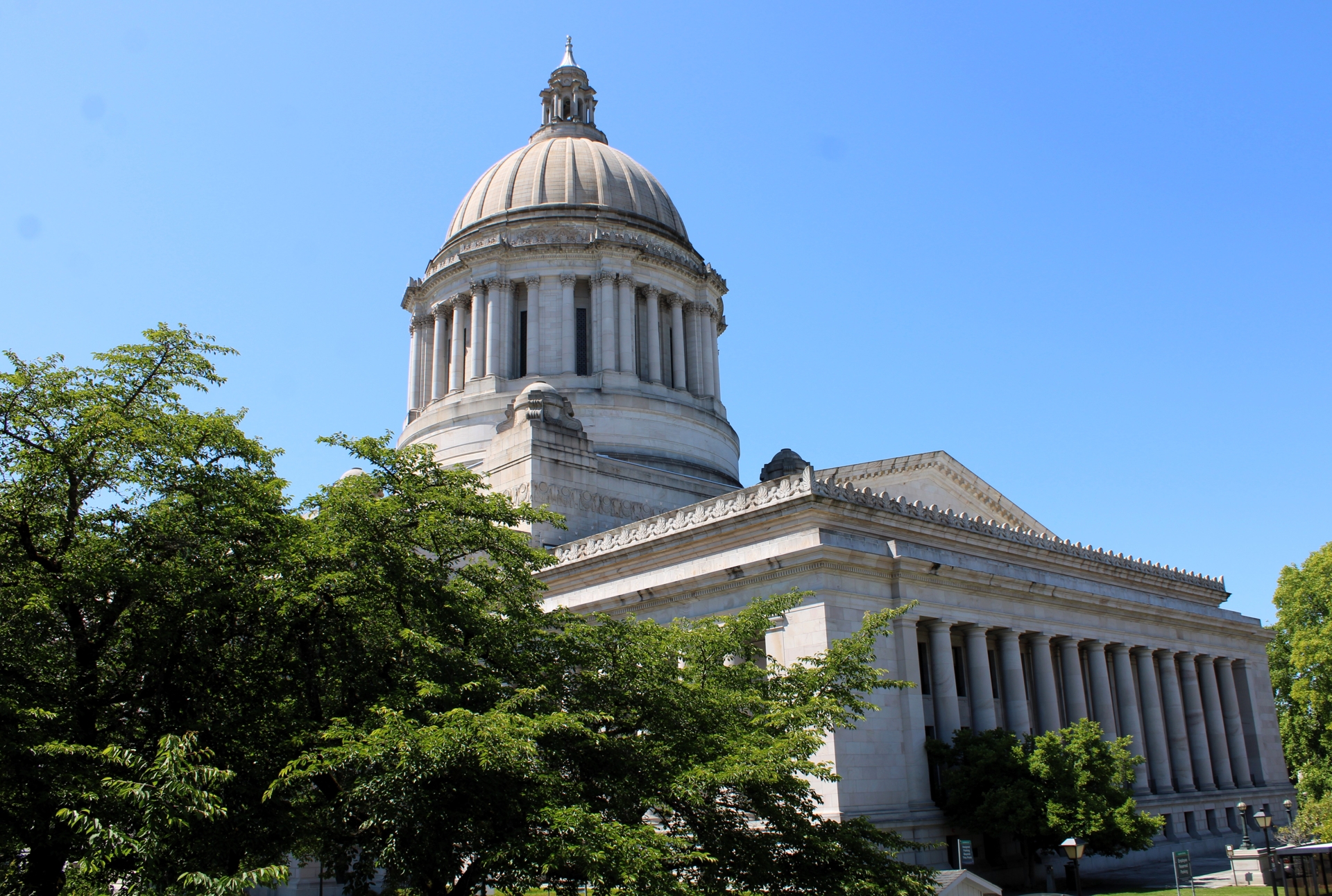
The Washington State Capitol dome is one of Olympia’s most recognizable landmarks. The city has adopted planning and design measures to help preserve views of the dome and the surrounding landscape.
Photo by Farragutful — Own work, CC BY-SA 4.0,
https://commons.wikimedia.org/w/index.php?curid=133725859
The city also is pursuing natural placemaking along its famous waterfront. The Washington State Department of Enterprise Services is advancing the Deschutes Estuary Restoration Project to restore the estuary and salt marshes in South Puget Sound, which were closed off when the area was converted into a reflecting pool for the Capitol building. The project will remove the 5th Avenue Dam to reopen water flow and tidal exchange, improving wildlife habitat and water quality. Restoring the estuary also is expected to reduce yearly flood elevations by up to 1 foot, improving climate resilience, while increasing public use through new boardwalks, water access points, and fishing piers.
Another placemaking initiative along Olympia’s iconic waterfront is the Olympia-Yashiro Friendship Bridge. Formerly known as the Fourth Avenue Bridge, it was originally constructed as a drawbridge across the Budd Inlet estuary in 1869. The original bridge was unreliable and prone to failure, so it was demolished and rebuilt in 1918 with a better design, complete with three beautiful arches. The second bridge was in use until 2001, when it was badly damaged by the Nisqually earthquake and reconstructed once again.
The new design kept the iconic three arches but featured new advancements as well. In fact, the city put so much care into the new bridge that the project took years longer than a more conventional repair might have required. That process reflects Olympia’s philosophy of taking as long as needed to get important civic projects right. The city prioritized making the bridge not only reliable and beautiful, but also a place for art and community. Ellen Sollod’s article about the bridge project says the city transformed the bridge “from a place to get through to a place to go.” The project was recognized by the U.S. Department of Transportation with a Design Excellence Award.
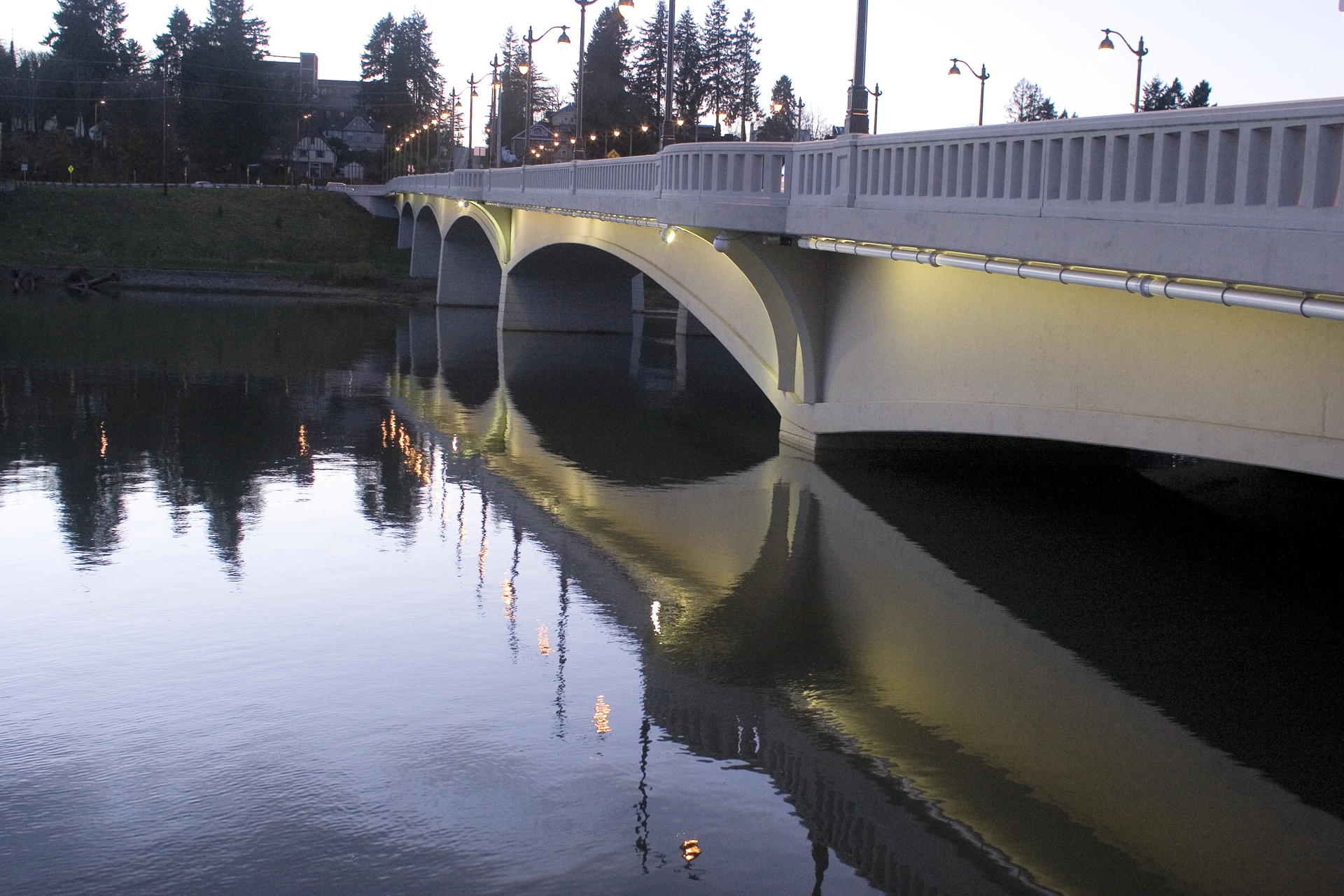
The Olympia-Yashiro Friendship Bridge glows at dusk above Budd Inlet. Rebuilt after the 2001 Nisqually earthquake, the bridge is now a celebrated landmark, community gathering place, and centerpiece of Olympia’s waterfront.
Photo courtesy of the City of Olympia.
The new bridge was built with a pedestrian walkway along the road, wide enough for walkers to stroll comfortably across the bridge and stop to enjoy views of the waterfront from viewing platforms. The platforms themselves have become a popular location for residents and tourists to watch the yearly migration of salmon, a magnificent natural sight at the end of August and beginning of September.
The Friendship Bridge also is a space for art and community. The walkway incorporates 3,000 square feet of marble, granite, and river rock mosaics that depict Olympia’s natural elements, including flowers and ocean waves. Olympia’s famous annual Arts Walk also has used the bridge for public art projects. In a 2003 Arts Walk project called “Knit the Bridge,” community members created woolly covers for the bridge’s 36 lamp posts. They were provided with free materials and an opportunity to create unique art that would be proudly displayed.
The Olympia-Yashiro Friendship Bridge exemplifies the values that make Olympia special and successful. It is an example of the connection between land, cultures, and communities. It tells a story of Olympia’s historical perseverance and preservation. It also is a place where community members can experience wonderful natural views, as well as art that they themselves have created.
Olympia is certainly known for its unique, quirky art. The city’s semiannual Arts Walk in the spring and fall brings thousands of people together to enjoy galleries, museums, and music venues. The Olympia Artspace Alliance also has an ongoing initiative to place local art exhibits in vacant store windows to prevent scenic blight downtown.
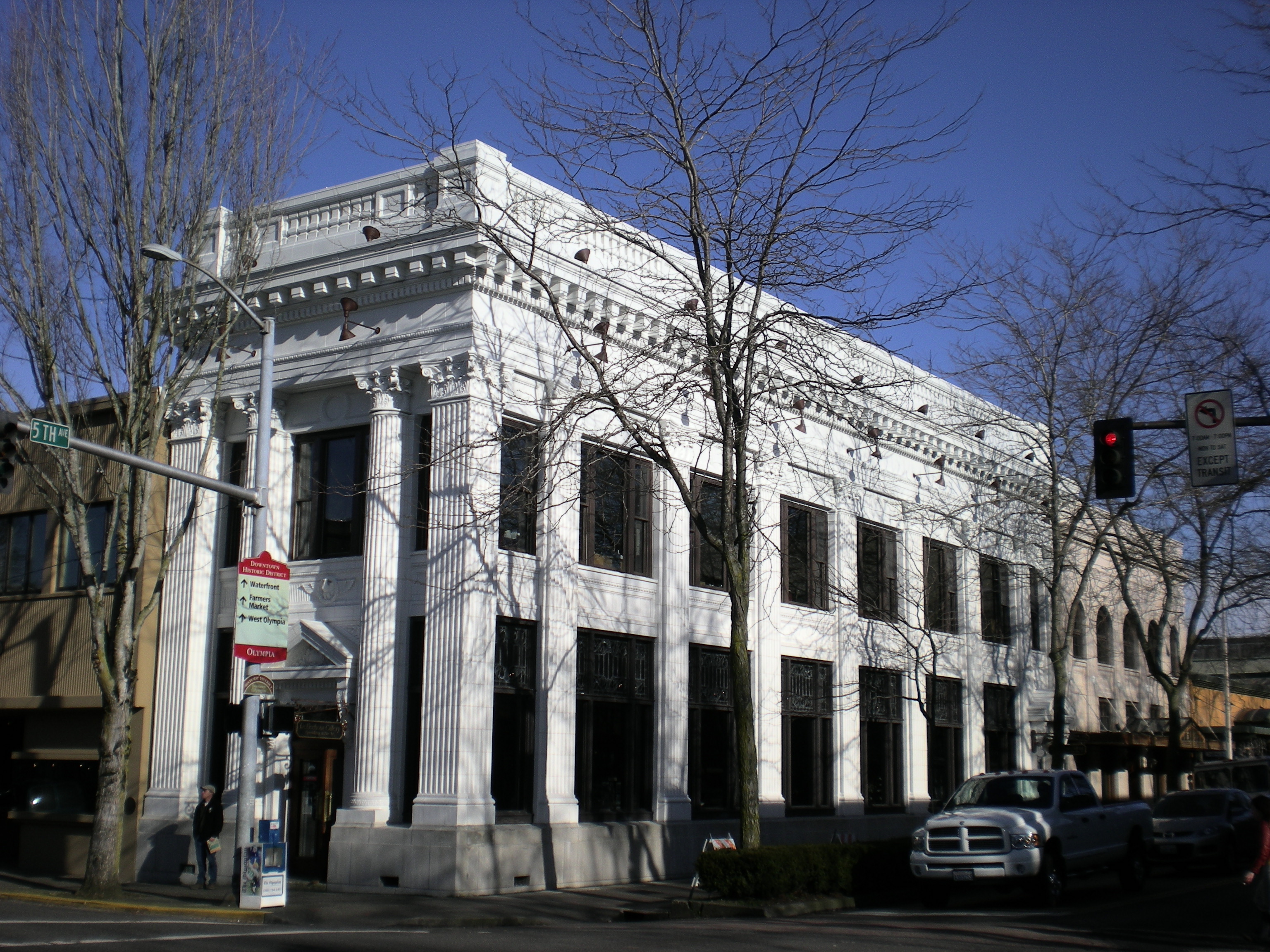
The historic Olympia National Bank building contributes to the architectural character and visual appeal of downtown Olympia, where historic and contemporary structures coexist along walkable city streets.
Photo by Murderbike — Own work, Public Domain,
https://commons.wikimedia.org/w/index.php?curid=3478828
The city also uses both the beauty and functionality of greenspaces. Yauger Park is nearly 50 acres of baseball and soccer fields, paths, a skate park, a playground, and community gardens. It features views of the water and Olympia’s iconic pine trees. But Yauger Park also serves a unique environmental purpose. It is home to a human‑made wetland that functions as a stormwater complex. When full, the pond can hold up to 27 million gallons of water, helping prevent nearby streets from flooding. Pollution in the water is filtered by the pond’s swales and weirs. After a storm, the water flows back toward Budd Inlet and the Salish Sea. Yauger Park’s pond also provides aquatic habitat for waterfowl, beavers, and amphibians.
Olympia is making strong advances toward climate resilience in its communities. The Office of Climate Programs is in the early stages of developing a resilience strategy to be added to the city’s Comprehensive Plan. One expected component of this strategy is resilience hubs: community‑based spaces devoted to helping residents prepare for the effects of climate change through education, coordination, and support. These hubs also would serve as spaces for social cohesion and collaboration toward a common goal.
Olympia also has implemented a Sea Level Rise Response Plan, installing tide gates and other measures to protect city streets and infrastructure from flooding. Dr. Pamela Braff, director of Climate Programs, says the city is leading with equity in its resilience projects despite the challenges. That priority is exemplified by the city’s subsidization of energy‑efficient, low‑emission heat pumps in low‑income communities.
References
City of Olympia. “Inspire Olympia.” https://www.olympiawa.gov/community/arts%2C_culture___heritage/cultural_access.php
City of Olympia. “Yauger Park.” https://www.olympiawa.gov/services/parks___recreation/parks___trails/yauger_park.php
Deschutes Estuary Restoration Project. “Project.” https://deschutesestuaryproject.org/project/
Federal Highway Administration. “Excellence in Highway Design 2004.” https://www.fhwa.dot.gov/publications/focus/04sep/05.cfm
Sollod Studio. “From the Laws of Man to the Laws of Nature.” https://www.sollodstudio.com/portfolio-items/from-the-laws-of-man/
Washington State Department of Ecology. “Deschutes Estuary Restoration.” https://ecology.wa.gov/ecologys-work-near-you/regional-work/southwest-region/deschutes-estuary-restoration
Hero image at top: Aerial view of Washington’s capital city, Olympia. Photo by Joseph Sohm on Shutterstock.