
Placemaking spotlight: Bennington, Vermont
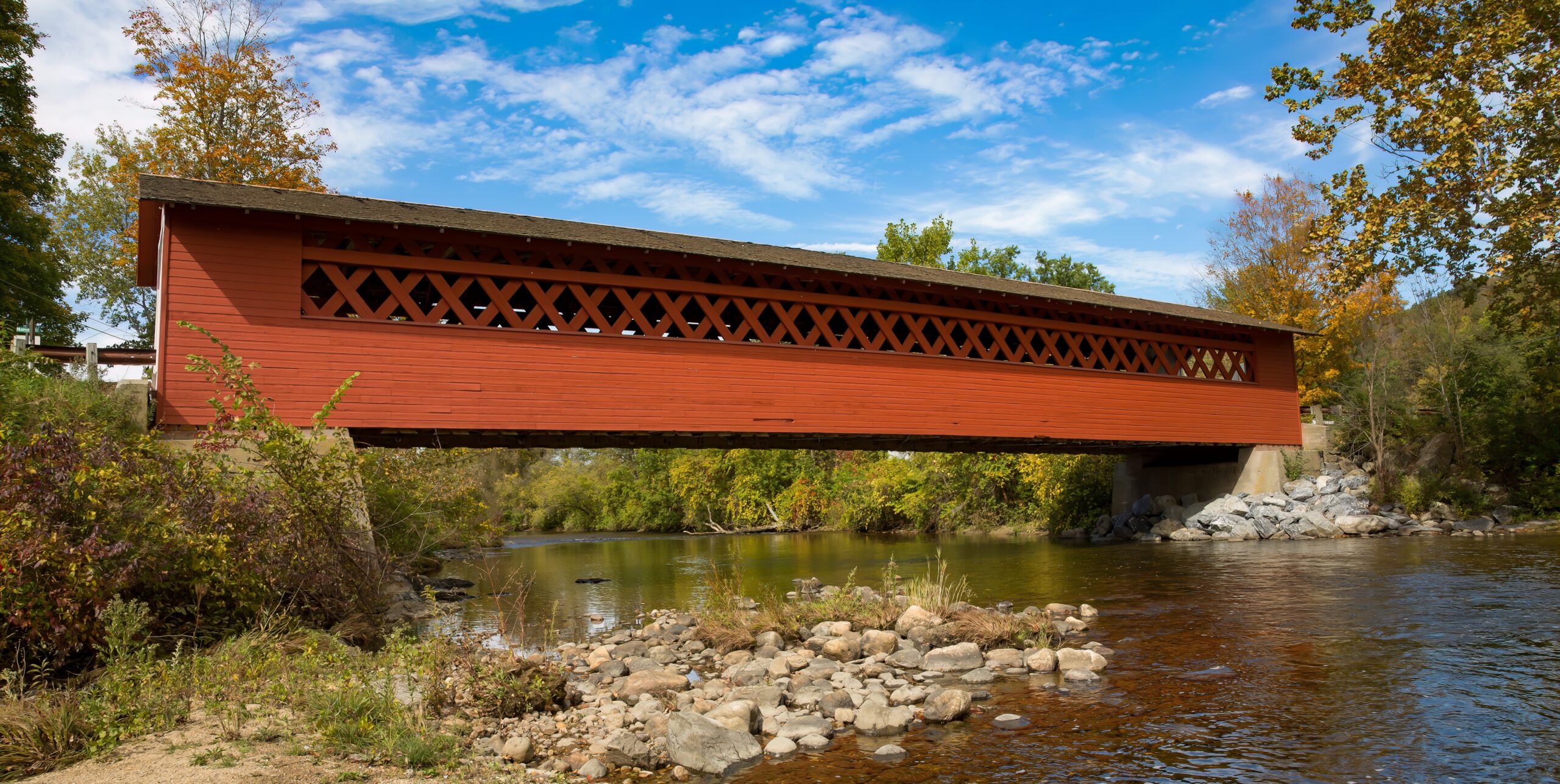
Bennington shows how community-driven placemaking can shape a town’s future
History
Bennington is the oldest town in the state of Vermont, but its history has not faded. Bennington County was originally settled by the Mohican Native American tribe. As colonists arrived, they worked with Mohican leaders to discuss land use and ownership. According to Communications Director Jonah Spivak, Bennington was established as part of the New Hampshire Grants in 1749. According to Historic Preservation Commission Chair and longtime Bennington resident Michael McDonough, Bennington developed as an agrarian community.
In 1777, Walloomsac, New York, was the site of the Battle of Bennington during the Revolutionary War. This battle resulted in a colonial victory and helped protect Bennington from British forces. A monument was built to commemorate the Battle of Bennington, and it is now the most visited tourist site in the state of Vermont.
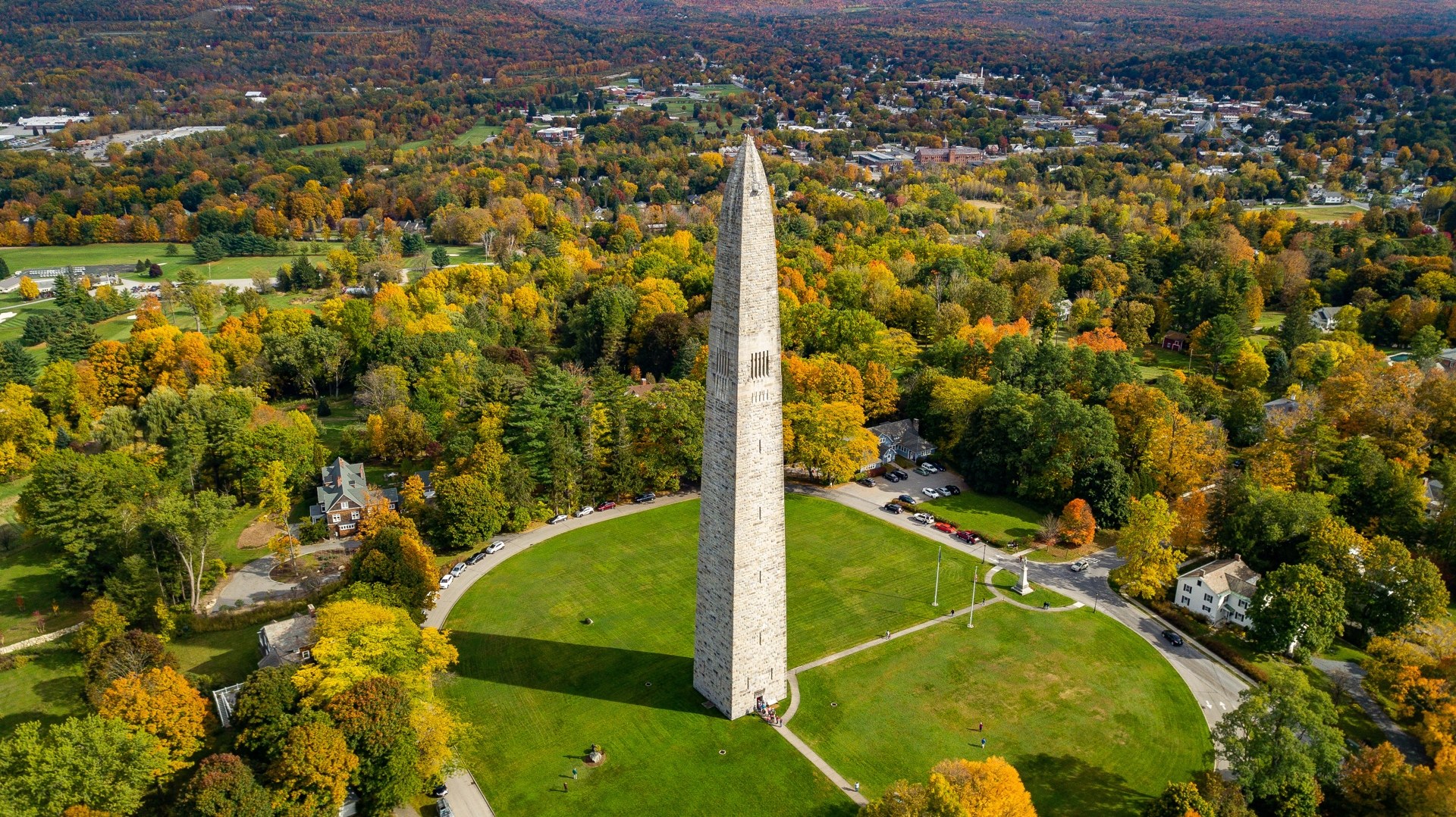
This aerial view of Bennington features the Bennington Battle Monument, a 306‑foot‑high stone obelisk commemorating the Battle of Bennington during the American Revolutionary War.
Photo by Zachary on Adobe Stock.
As the Industrial Revolution took place in the 1800s, the river that ran through Bennington allowed for water‑powered sources, which grew mills and other industrial sites. However, as the economy became more automated and international, jobs disappeared. Despite this, Bennington still retains more of its industrial base than Vermont as a whole. These economic shifts changed the town itself. Downtown Bennington went from a place where residents bought all they needed to an area with entertainment, eateries, and bookstores. McDonough framed it as changing from “something that provides life to somewhere that enhances people’s lives.”
This mixed‑use downtown is surrounded by residential neighborhoods, serving as a central part of life for Bennington. Downtown Bennington is one of Bennington’s three districts. The other two are North Bennington and Old Bennington. Old Bennington retains the character of the early days of Bennington. Similar to Strawbery Banke in New Hampshire, Old Bennington is anchored by historic monuments such as the Battle of Bennington Monument and the Old First Congregational Church.
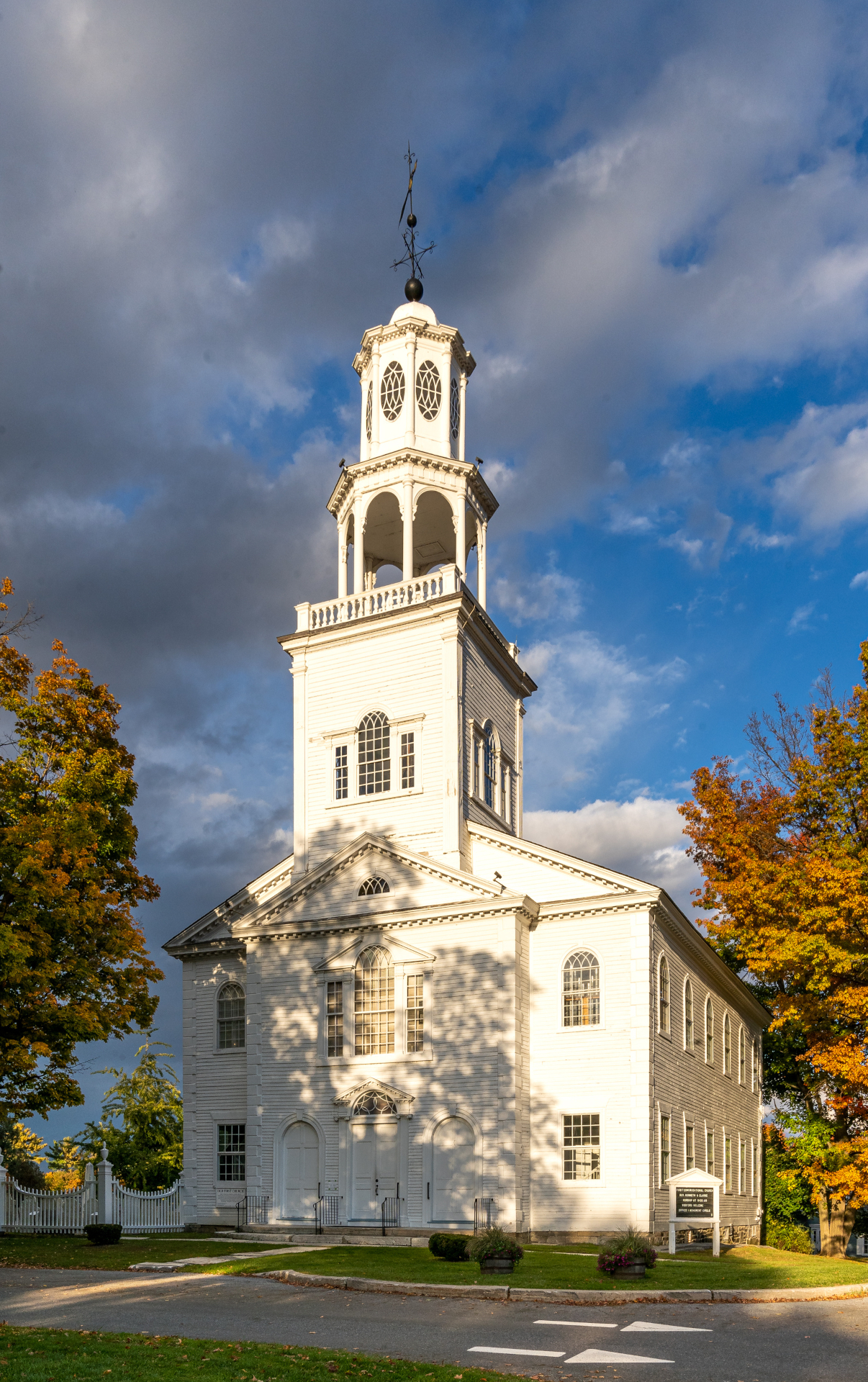
Vermont’s first Protestant church, the “Old First” Congregational Church, was built in Bennington in 1805. Photo by Brian on Adobe Stock.
Placemaking and Scenic Beauty
The town of Bennington has multiple municipal programs for promoting scenic beauty. The first is called Bennington in Bloom, which uses urns, hanging baskets, and planting beds to beautify the main streets. This program is done strategically, as the town funds consultants who analyze the needs within the streetscape and determine the lifespan of trees and plants. The town government also runs a tree‑planting program across Bennington.
The Better Bennington Corporation also has worked on developing new places for the people of Bennington to gather. In what used to be two separate vacant lots, Bennington has created a pocket park and a splash pad with a stage. These projects combine scenic beauty, accessible greenery, and historic preservation. When done intentionally, all these causes can be advanced at once.
The town does not work alone in placemaking and scenic beauty; the Better Bennington Corporation is a Vermont‑recognized downtown program. The Vermont Downtown Board was established in 1998. This board encourages the growth of downtowns in Vermont with specific tax credits and other designations. As a private entity, the Better Bennington Corporation has worked on enhancing the walking tour of historical sites and the presentation of historical sites on the town’s website.
The Better Bennington Corporation frequently works with public entities in Bennington. For example, it has collaborated twice with schools in Bennington to make town banners. The first banners were painted by K-12 children, and the second set was made by graphic art students at the local technical college to celebrate the 250th anniversary of the Revolutionary War.
The Better Bennington Corporation also conducted analysis on the riverwalk that runs through downtown Bennington. It worked with the town to seek a state grant, which funded widening, new lighting, and repaving along the walkway.
Bennington and the Better Bennington Corporation do face difficulties with projects throughout Bennington. Facades in downtown businesses have aged and often need new paint. The town and the Better Bennington Corporation hope to take recommendations from downtown stakeholders but have difficulty meeting with all businesses to determine their needs.
Historic Preservation
Another focus of Bennington and the Better Bennington Corporation is historic preservation. The certification of historic sites rests under the state of Vermont’s Division for Historic Preservation. Bennington works with the state on projects such as the establishment of new National Register historic districts in downtown Bennington. The state assisted the town in obtaining two grants to pay for a consultant who could help prepare the nomination. The state then reviews the application before forwarding it to the National Park Service for final review and listing in the National Register of Historic Places.
The local responsibilities of Bennington’s Historic Preservation Commission are to review all applications for new signs and building changes in the downtown area. New signs and exterior and interior changes must fit with the historic character of the current downtown area. One of these standards is that new fabrics must at least replicate old materials. Additionally, signs must fit onto the entablature of the buildings and should not simply be placed onto facades.
Furthermore, Article 2(3), Section A, prohibits signs that are “blinking, flashing, or fluttering lights or other illuminating devices which have a changing light intensity, brightness, or color.”
The town of Bennington retains control over a historic color chart that is referenced for basic repairs or repainting.
Bennington focuses on adaptive reuse in its historic preservation efforts. There are currently multiple redevelopment projects underway in Bennington. One project is converting former mills into affordable housing, while another is rehabilitating a historic hotel. These changes are regulated by town zoning laws. Section 4.4, Clause D, of the town land‑use ordinance requires that adaptive reuse “not alter the footprint, historic facade, character, or immediate context of the structure.” Exterior renovations shall be compatible with the original architectural design of the structure.
Bennington, Vermont, has shown its ability to use public and private entities to harness the power of the community. The town has used this energy to complete project after project that makes the town more beautiful while bringing people together and preserving its historic culture. Parks on repurposed land, community planting programs, and design standards for buildings are just some of the ways it does this.
Throughout its ups and downs, Bennington is a shining example of the saying, “Nobody is going to invest in a community unless the community will invest in itself first.”
References
American Battlefield Trust. “Battle of Bennington Facts & Summary.” June 8, 2017. https://www.battlefields.org/learn/revolutionary-war/battles/bennington
Jones, A. “Perspectives.” Bennington Museum | Grandma Moses | Vermont History and Art. Feb. 7, 2023. https://benningtonmuseum.org/portfolio-items/perspectives/
McDonough, Michael. Scenic America case study interview with Maya Coppage. July 2025. Personal communication.
Native Languages of the Americas. “Vermont Indian Tribes and Languages.” 2020. https://www.native-languages.org/vermont.htm
Town of Bennington, Vermont. “Building & Zoning Ordinances.” 2025. https://www.benningtonvt.org/services/planning___permitting/building___zoning_ordinances.php
Town of Bennington, Vermont. “History.” 2025. https://www.benningtonvt.org/community/history.php
Hero image photo: The Burt Henry Covered Bridge spans the Walloomsac River in Bennington, Vermont. Photo by Bob on Adobe Stock.