
New Virginia law calls for study to assess the value of undergrounding utility lines
RICHMOND, Va. (March 16, 2026) — If you’ve ever driven a scenic Virginia roadway — past rolling farmland, historic towns, or wooded ridgelines — you know how much the view matters.
Now, the Commonwealth is taking a meaningful step to help protect those landscapes while strengthening its energy future.
The Virginia General Assembly has passed House Joint Resolution 44, a measure requesting a formal study of the undergrounding of electrical transmission lines. The resolution now heads to the governor’s desk for signature.
Scenic America, in partnership with Scenic Virginia, advocated for the legislation as part of a broader effort to promote resilient, reliable, and visually responsible infrastructure.
At its core, the resolution directs the State Corporation Commission’s Division of Public Utility Regulation to evaluate both the benefits and costs of placing transmission lines underground. The study will also explore ways to streamline permitting and approvals — an important step in making undergrounding more feasible in real‑world conditions.
This comes at a pivotal moment. Electricity demand in Virginia is expected to rise sharply in the coming decade, driven in large part by the rapid expansion of data centers. Meeting that demand will require new infrastructure — but how that infrastructure is built matters.
Undergrounding offers a compelling path forward.
“This study will help bring greater clarity to the long‑term value of undergrounding. When you account for reduced maintenance, fewer outages, and increased resilience, undergrounding often proves to be a smart investment. We commend the Commonwealth of Virginia for committing to evaluate these benefits in a rigorous, data‑driven way.”
— Tziporah Feldman, Scenic America director of policy and research
— Tziporah Feldman, Scenic America director of policy and research
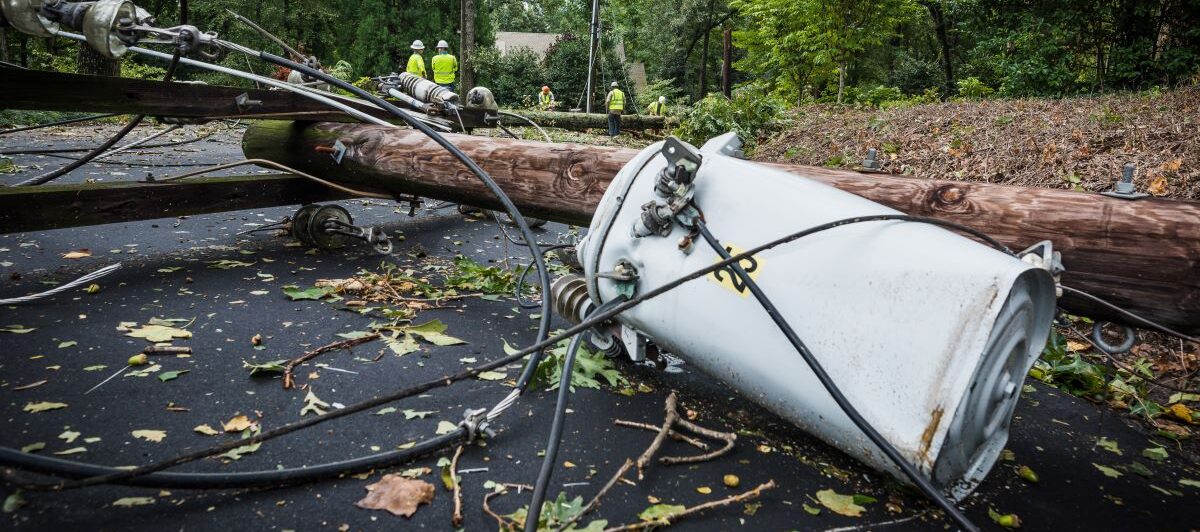
Burying transmission lines can significantly improve grid reliability by shielding critical infrastructure from storms, falling trees, and other disruptions. It can also reduce long‑term maintenance costs, limit wildfire risks, and enhance public safety. Just as importantly, it helps preserve the scenic character of communities — protecting the viewsheds, historic settings, and natural beauty that define so much of Virginia.
While undergrounding can involve higher upfront costs, studies and real‑world applications increasingly show that it is a smart long‑term investment, delivering savings through reduced maintenance, fewer outages, and greater resilience in the face of extreme weather.
The newly approved study will bring together a wide range of stakeholders — from local governments and utilities to technical experts and regional grid operators — to examine how undergrounding can be implemented effectively and responsibly.
For Scenic America, this moment represents more than a policy milestone. It reflects growing recognition that infrastructure decisions don’t have to come at the expense of the places people love.
With this action, Virginia is positioning itself as a national leader in exploring how to modernize the electric grid while safeguarding scenic beauty, community character, and environmental health.
Photo in top header: Repair and rebuilding of downed power infrastructure adds to the cost of overhead transmission systems. Shutterstock photo.