
Scenic America outlines priorities for scenic roads and resilient infrastructure in federal transportation policy
In early February, Scenic America submitted formal recommendations to the U.S. Department of Transportation in response to the agency’s Request for Information on priorities for the next federal surface‑transportation reauthorization.
As the nation’s only nonprofit dedicated solely to preserving and enhancing America’s scenic character, Scenic America focused its comments on areas where transportation policy can deliver broader public benefits: protecting roadside trees, strengthening the National Scenic Byways Program, and improving the resilience of utility infrastructure in the face of extreme weather.
Protecting roadside trees and community character
Scenic America urged federal policymakers to close a long‑standing loophole that allows publicly owned roadside trees to be removed solely to improve billboard visibility.
Currently, 35 states permit tree cutting on public land along federal‑aid highways for commercial advertising purposes, even when no transportation or safety need exists. Scenic America argued that vegetation management in highway rights‑of‑way should serve a clear public purpose, consistent with federal law.
Scenic America further asserted that roadside trees are critical infrastructure. They reduce flooding and erosion, stabilize slopes, filter air pollution, and help protect nearby homes and property values. Preserving tree cover also improves weather resilience, limiting storm‑related damage to roads and surrounding communities.
Fully funding the National Scenic Byways Program
Scenic America also called for sustained, dedicated funding for the National Scenic Byways Program.
Created by Congress in 1991, the program recognizes roads with exceptional scenic, historic, cultural, recreational, and natural value. Scenic byways are powerful economic engines, attracting tourism and supporting jobs — particularly in rural and gateway communities.
While the program has seen renewed momentum in recent years, it remains underfunded and dependent on annual appropriations. Scenic America urged Congress to authorize long‑term funding beginning at $65 million annually, allowing communities to plan ahead and invest in safety improvements, visitor amenities, interpretive signage, and multimodal infrastructure across more than 1,200 designated scenic byways nationwide.
Building resilience through “dig once” infrastructure planning
A central theme of Scenic America’s submission was the need to modernize how utilities are built alongside transportation projects.
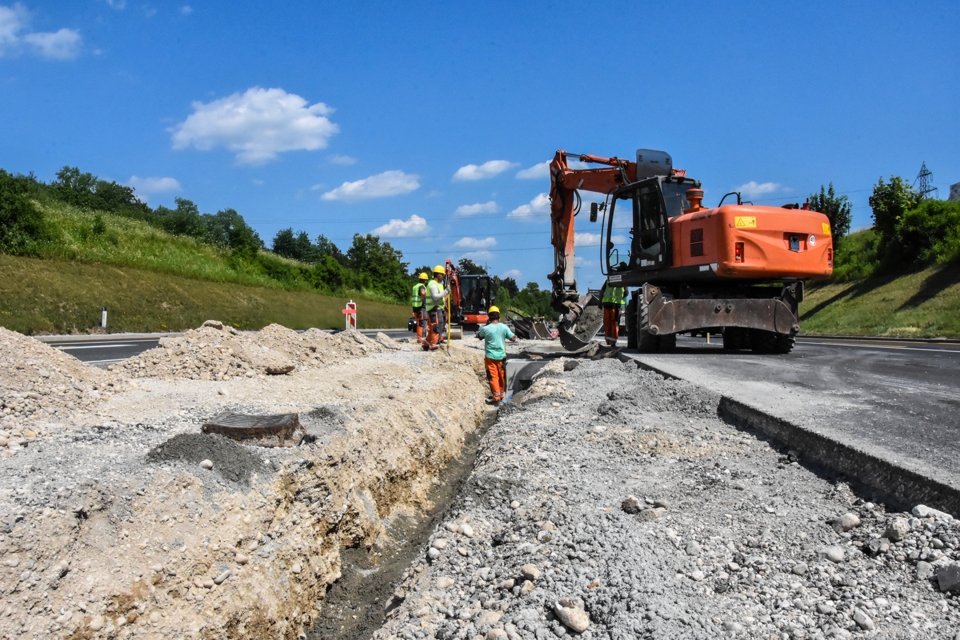
Scenic America recommended a “dig once” approach that would prioritize undergrounding utility lines during federally funded highway construction. Underground systems are far more resilient to wind, ice, and falling trees, and they reduce outages, emergency response delays, and long‑term maintenance costs. Furthermore, the undergrounding of utility lines aids in the prevention of wildfires, which are often sparked by malfunctioning overhead power infrastructure.
Coordinating undergrounding within existing rights‑of‑way also minimizes land‑use conflicts, protects private property, and preserves the visual character of America’s roadways. Scenic America urged federal agencies to require coordinated planning among transportation, energy, and communications providers and to evaluate costs over the full life of infrastructure — not just upfront construction expenses.
Continuing federal investment in grid resilience
Finally, Scenic America emphasized the importance of continuing funding for the Grid Resilience and Innovation Partnerships (GRIP) Program, the largest federal investment in electric‑grid resilience.
The program has already supported large‑scale undergrounding and hardening projects nationwide. Scenic America urged policymakers to maintain undergrounding as a core, eligible resilience strategy — particularly when paired with coordinated corridor projects.
Transportation policy that serves people and places
Across all recommendations, Scenic America’s message was clear: federal transportation investments should protect public resources, strengthen community resilience, and enhance the places where people live, work, and travel.
By safeguarding roadside trees, investing in scenic byways, modernizing utility infrastructure, and supporting grid resilience, federal policy can deliver lasting benefits for safety, economic vitality, and scenic character.