
Placemaking spotlight: Natchez, Mississippi
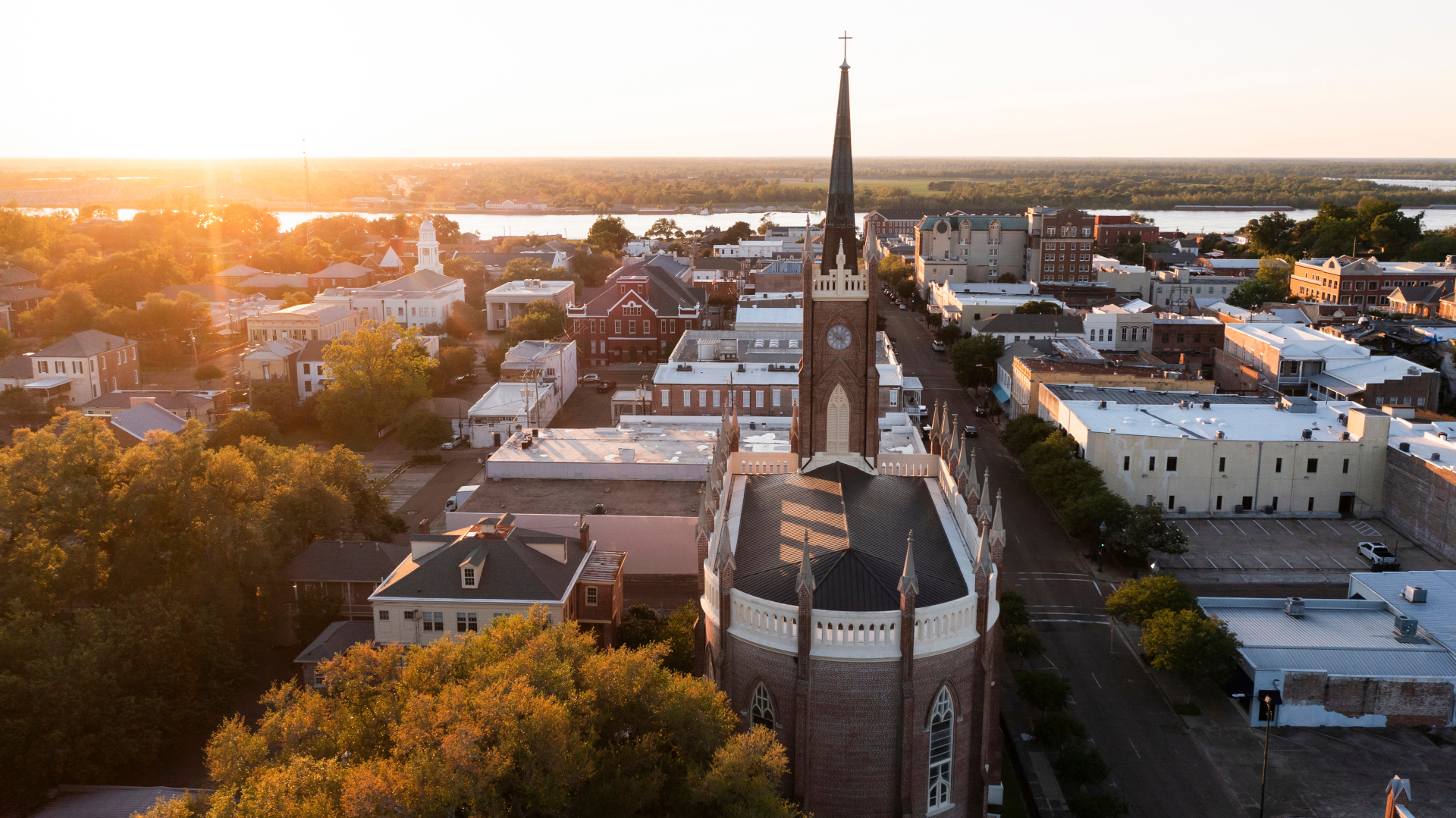
Natchez shows how history, truth, and community can shape a powerful sense of place
Natchez, Mississippi, is a small city known for its antebellum architecture and rich historical legacy. Named after the Indigenous Natchez people, the land was taken from native populations when French colonists established Fort Rosalie in 1716. Natchez was ceded to Great Britain in 1763 following the French and Indian War and then came under Spanish control following the American Revolutionary War.
In the 19th century, Natchez was the site of the South’s second‑largest domestic slave market. This history is commemorated at the Forks of the Road greenspace, the former site of the slave trade. One of the most significant sites in the area is the Natchez Trace, a historic travel corridor created by Indigenous peoples that stretches roughly 440 miles from Nashville to Natchez. Today, Natchez serves as a historical destination where visitors can learn about the Indigenous Natchez people, enslaved Africans from the Bambara ethnic group, and European immigrants. Visitors can tour antebellum mansions throughout the city and explore historic sites along the Natchez Trace Parkway and Natchez Trace Trail.
Community Engagement and Tourism
Founded in June 2021 by Natchez native Joseph A.C. Smith, Black Natchez strengthens community engagement and cultural tourism by celebrating and preserving Black heritage across the Miss‑Lou region. The organization protects noteworthy African American sites, shares local stories with wider audiences, and supports the revitalization of predominantly Black neighborhoods. Smith’s vision is to reimagine these areas as vibrant destinations where residents and visitors can experience culture, gather for shared activities, and support a growing community economy.
With support from Smith’s personal investment and donor contributions, Black Natchez has already delivered visible results. In 2024, volunteers partnered with business owners to refresh long‑neglected storefronts along the MLK Triangle, enhancing neighborhood pride and improving the visitor experience. In March 2025, the organization opened the 1720 Gallery & Gift Shop — a cultural anchor offering daily meals, Natchez‑inspired merchandise, and a welcoming space that highlights local history — earning Smith the 2025 Placemaking Award from the local Main Street Association.
Looking ahead, Black Natchez plans to activate additional properties and introduce community‑centered programming, including live concerts and a seasonal farmers market, by fall 2026. Through these initiatives, the organization continues to elevate cultural tourism, build local pride, and contribute to the long‑term vitality of the MLK Triangle.
Historic Preservation
Arguably the best times to visit Natchez’s antebellum mansions are in the fall and spring, when the Natchez Garden Club and the Pilgrimage Garden Club allow visitors to tour both private and Garden Club‑owned residences. Visitors can see architecture ranging from Greek Revival, Italianate, Federal, Victorian, and Gothic Revival styles, as well as former plantations, slave dwellings, the site of a Union Army headquarters, sculpture gardens, and scenic landscapes.
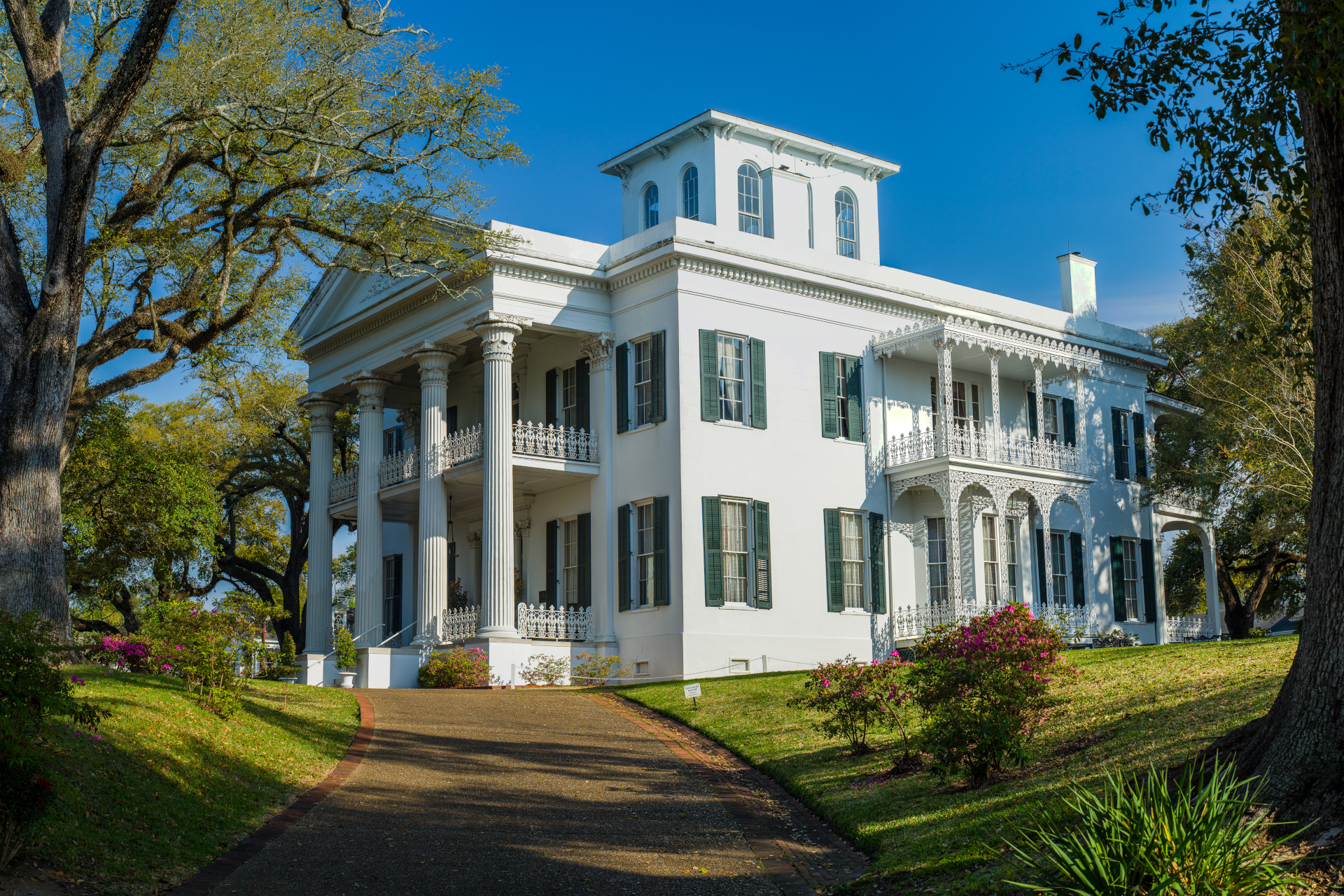
Built in the 1850s and now operated as a historic house museum, Stanton Hall is a Greek Revival mansion. It is one of the most opulent antebellum mansions to survive in the southeastern United States. The house was declared a National Historic Landmark in 1974. Photo by stevengaertner on Adobe Stock.
The Natchez Garden Club and its nonprofit sister organization, the Preservation Society of Ellicott’s Hill, have obtained grants from state sources, including the Community Heritage Preservation Grant Program, which is authorized and funded by the Mississippi Legislature and the Mississippi Department of Archives and History.
At the forefront of the historic preservation movement in Natchez is the Historic Natchez Foundation. Its impact on preserving local history has been immense. The organization has helped list more than 1,000 historic buildings in the National Register of Historic Places, provided access to tax incentives and grant eligibility for historic property rehabilitation, and rehabilitated historic houses for affordable housing through the Heritage Housing Program. Notably, the Historic Natchez Foundation has acquired more than 50 historic properties that might otherwise have been demolished — properties that private developers are often unlikely to purchase.
Carter Burns, executive director of the Historic Natchez Foundation, attributes the success of historic preservation in Natchez to its early adoption compared with other cities. The movement began in the 1920s with preservation efforts centered around City Hall, and the city’s annual pilgrimage tours were so successful that they helped sustain the community during the Great Depression.
Burns also points to the Mississippi State Income Tax Credit, which offers a 25% state income tax credit for the rehabilitation of historic properties. Unlike in many states, these credits can be used by private homeowners. Coupled with federal tax credits, many Mississippians can qualify for incentives covering up to 45% of project costs. Property owners also have the option of receiving the state tax credit as a rebate. Given that tourism is the primary driver of Natchez’s economy, historic preservation provides substantial economic value.
Despite the Historic Natchez Foundation’s mission to “preserve and tell the story of Natchez,” Burns cautions against misusing the word “preservation” in the broader context of the city. The Historic Natchez Foundation is not opposed to new development. In fact, Burns suggests that “managed change” may be a more accurate description of the organization’s philosophy. New development should highlight the local character that makes Natchez unique.
For example, when the city needed a new convention center, new construction was necessary. Rather than constructing a modern building that would sharply contrast with surrounding architecture, designers broke up the exterior facade to resemble a series of historic storefronts, helping the building reinforce the area’s sense of place.
Mingo Tingle, director of planning and zoning for the City of Natchez, echoes this perspective regarding new development. Tingle argues that Natchez must be able to grow and attract new businesses without sacrificing its character. He points to newer development along the nearby highway and notes that he would like to see local design standards adopted that would make these developments more attractive and more reflective of Natchez’s historic identity. Such improvements, he argues, could encourage more travelers to venture into the city itself.
When asked about potential conflicts between updated zoning practices and existing historic preservation requirements, Tingle says there are no major conflicts but acknowledges differing public priorities in the downtown area. For example, many residents want a walkable city where they can reach a grocery store without driving. However, grocery stores often seek larger parking lots, which can be difficult to accommodate downtown because doing so could require the demolition of historic properties. As a result, while city planning must address modern needs, historic preservation remains a central consideration.
Both Tingle and Burns agree that educating real estate professionals and property owners is an important component of historic preservation. The city’s Planning Department plans to launch a “publicity blitz” to communicate with homeowners in the historic district about requirements for work on historic properties and to ensure prospective buyers understand their future responsibilities.
Natchez Trace Parkway
Roughly following the historic Natchez Trace travel corridor, the Natchez Trace Parkway is a 444‑mile scenic drive from Nashville to Natchez. Designated an All‑American Road, the byway must possess characteristics of national significance in at least two intrinsic‑quality categories and must be considered a destination worthy of travel in its own right.
In addition to enhancing scenic quality, the parkway serves as a major economic engine. In 2022, approximately 6.5 million visitors traveled the Natchez Trace Parkway, spending an estimated $474 million in nearby communities and supporting 5,660 jobs. Altogether, visitor spending generated an estimated economic impact of roughly $640 million for communities along the route, including Natchez.
Mingo Tingle refers to the Natchez Trace as the “lifeblood” of Natchez. While the original roadway did not extend fully into the city, Natchez invested in extending the route in 2005. Where the road now terminates at Liberty Road, the city is working to transform the corridor into a major gateway connecting visitors to downtown Natchez.
In addition to the Natchez Trace Parkway, the National Park Service manages Natchez National Historical Park, which includes four distinct sites: Fort Rosalie, the William Johnson House, Melrose, and the Forks of the Road.
The William Johnson House preserves the story of William Johnson, a free Black businessman and diarist whose writings provide a rare firsthand account of life in antebellum Natchez. Melrose was the estate of John T. McMurran, a lawyer, planter, and state legislator. Fort Rosalie served as a French fortification established in 1716, while the Forks of the Road marks the site of what became the second‑busiest slave market in the Deep South between 1832 and 1863.
Mississippi River Scenic Views
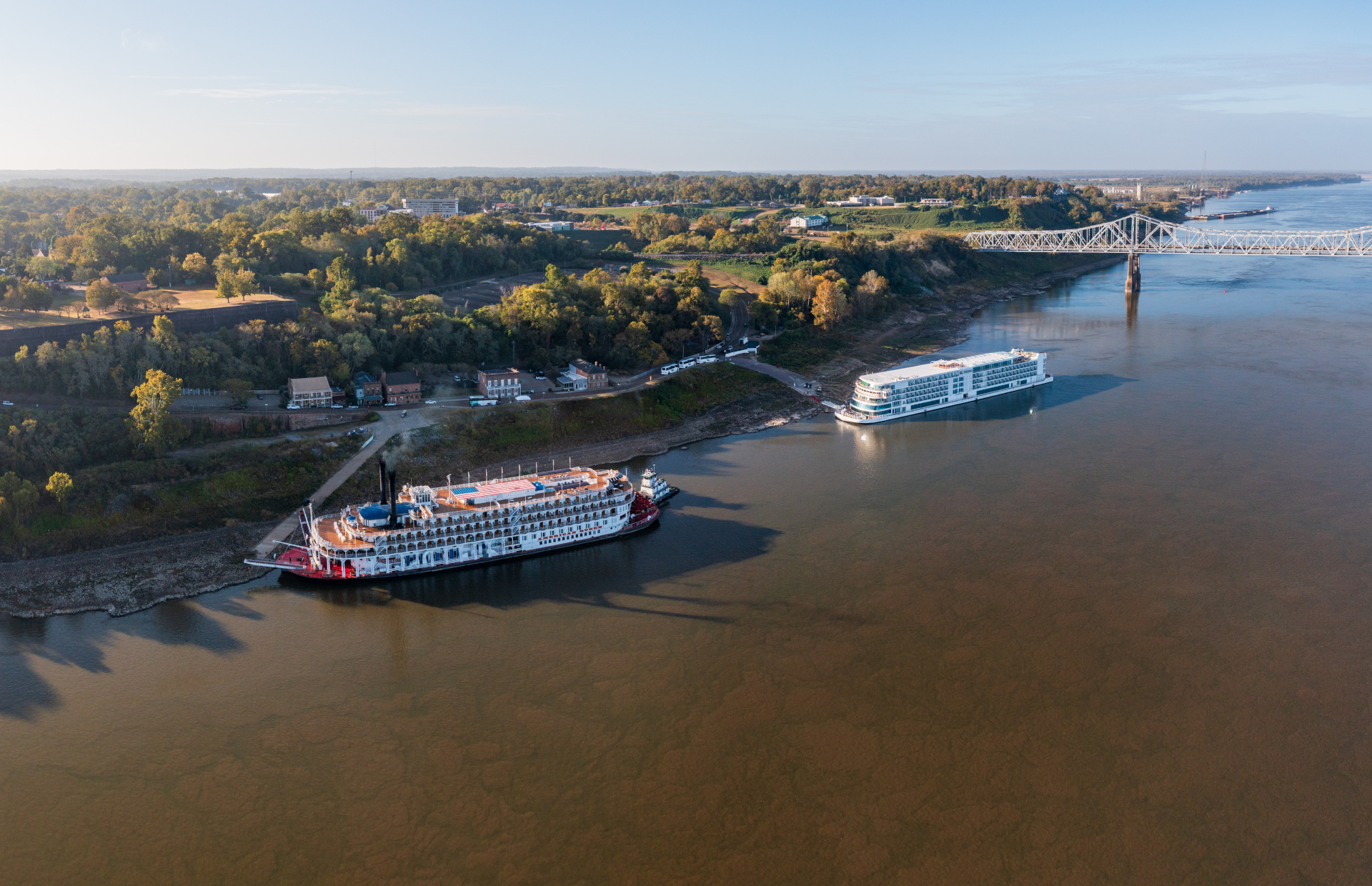
Riverboats old and new dock “under the hill” in Natchez, where the Mississippi River continues to connect the city’s past and present. Photo by steheap on Adobe Stock.
On the opposite side of the city from the Natchez Trace Parkway lies the Mississippi River. Alongside its early embrace of historic preservation, one of Natchez’s greatest assets is its scenic beauty. When the city’s street grid was established, planners intentionally left a large undeveloped area along the edge of the river bluff.
With its dramatic views, Natchez became a model for embracing both the scenic vistas inherent to the region and the historic development patterns that define its character. The result is a community that balances preservation of the natural landscape with preservation of its built environment.
References
National Park Service. “American Indians and the Natchez Trace.” https://www.nps.gov/natc/learn/historyculture/indians.htm
National Park Service. “Natchez National Historical Park.” https://www.nps.gov/natc/learn/historyculture/places.htm
National Park Service. “Natchez Trace Parkway.” https://www.nps.gov/natr/index.htm
National Park Service. “Tourism to Natchez Trace Parkway Contributes $474 Million to Local Economy.” https://www.nps.gov/natr/learn/news/tourism-to-natchez-trace-parkway-contributes-474-million-to-local-economy.htm
Natchez Democrat. “Celebrating Black History: Forks of Road Tells Story of Second‑Largest Slave Market in the South.” https://www.natchezdemocrat.com/2020/02/27/celebrating-black-history-forks-of-road-tells-story-of-second-largest-slave-market-in-the-south/
Hero image at top: Photo by Matt Gush on Adobe Stock.