
Placemaking spotlight: Edwardsville, Illinois
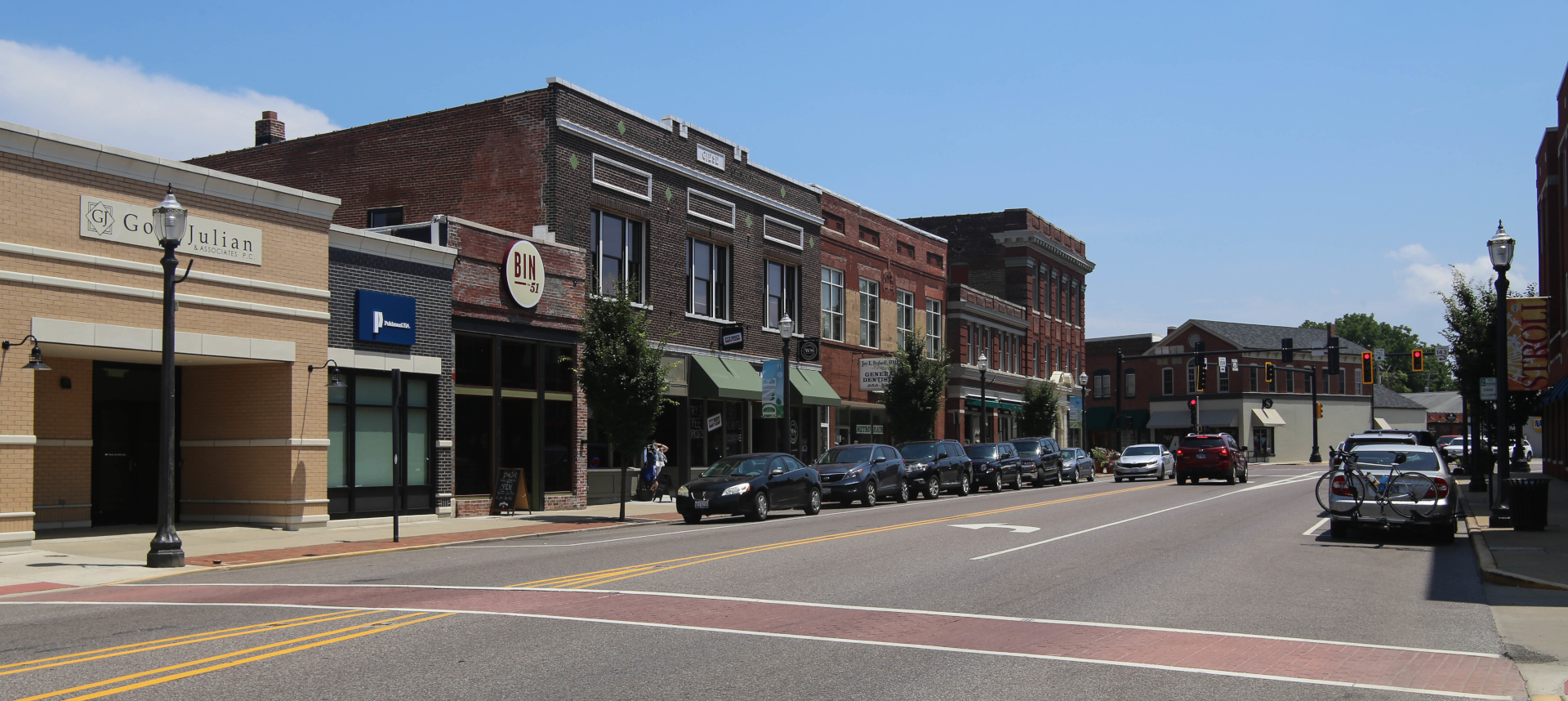
Edwardsville shows how a community can avoid becoming “Anyplace, USA”
Many towns have one or two defining characteristics or amenities that make them unique. Other towns, however, make poor planning or design choices, allow visual blight to proliferate, and lose any distinctive character or individual sense of place. These communities could be called “Anyplace, USA.”
Edwardsville, Illinois, could not be further from this description. Edwardsville offers an uncommon combination of assets, including parks, greenspaces, two major byways, historic districts, livable neighborhoods, and renowned bike trails.
Located only a 25-minute drive from St. Louis, Edwardsville combines small-town charm with economic strength and access to jobs that many other small cities simply cannot achieve. The community boasts a strong school district, and with Southern Illinois University Edwardsville in its backyard, it offers significant opportunities for the local workforce.
Scenic byways as economic drivers
Edwardsville sits near the Great River Road, one of the nation’s premier scenic byways.
All-American Roads, considered the highest tier of the National Scenic Byways Program, must possess characteristics of national significance and be considered destinations and reasons for travel unto themselves. While the road itself is scenic, hugging the Mississippi River, its broader impact lies in its connection to small river towns. Following the Mississippi for 3,000 miles from northern Minnesota to the Gulf of Mexico, the Great River Road passes through 10 states and near hundreds of unique towns, including Edwardsville.
As if the Great River Road were not enough of a draw, Route 66 also traverses directly through Edwardsville. The historic highway is a major tourism and economic asset for the city. Edwardsville credits the Great Rivers & Routes Tourism Bureau, a certified regional destination marketing and management organization, with increasing public awareness of the byway. The city also credits the Illinois Office of Tourism for understanding the road’s importance, especially as the Route 66 centennial approaches in 2026.
James Arnold, economic and community development director for the City of Edwardsville, describes how four recent Route 66 projects highlight both the importance of historic preservation for improving tourism and the need for state and federal grants to support the continued maintenance, preservation, and restoration of Route 66. Four state grants were secured in Edwardsville by Great Rivers & Routes Tourism Bureau and funded:
• A mural on a downtown wall at 100 E. Vandalia Street. This mural was created in preparation for the centennial and is one of 14 murals on the Route 66 Postcard Mural Trail in Southwest Illinois.
• A 12-foot monument shield located on Illinois Route 157, along the original stretch of Route 66 in Edwardsville.
• Interpretive panels in the city with information about stops along Route 66 in Edwardsville.
• West End Service Station. The purchase of the West End Service Station from the state of Illinois in 2022 and its subsequent restoration as a classic service station. After Route 66’s decline, the original West End Service Station became a dental office. With help from a state grant secured by Great Rivers & Routes Tourism Bureau, the City of Edwardsville purchased the building and turned it into a successful Route 66 interpretive center. West End Station represents one of the major Route 66 landmarks in Southwest Illinois and one of the few original Route 66 service stations left in the area.
Greenspace and ecotourism
Preserving and creating greenspaces is at the heart of Edwardsville’s placemaking strategy. Cory Jobe, CEO of Great Rivers & Routes Tourism Bureau, notes that outdoor recreation and ecotourism are central drivers of tourism in both Edwardsville and Southwest Illinois more broadly. In addition to the recreation opportunities Edwardsville provides, Jobe notes that birding is popular in the region, especially winter bald eagle watching.
Cathy Hensley, communications coordinator for the City of Edwardsville, highlights that Edwardsville has been forward-thinking in recognizing the importance of preservation. Hensley points to the Watershed Nature Center, which just 40 years ago was a sewage lagoon. With more than 40 acres of land, the city saw its potential and turned it into a park that includes 3,000 feet of paved trails, 800 feet of concrete walks elevated over wetlands, two observation towers, one observation blind, two lakes, prairies, upland forest, and a 1,500-square-foot Interpretive Welcome Center.
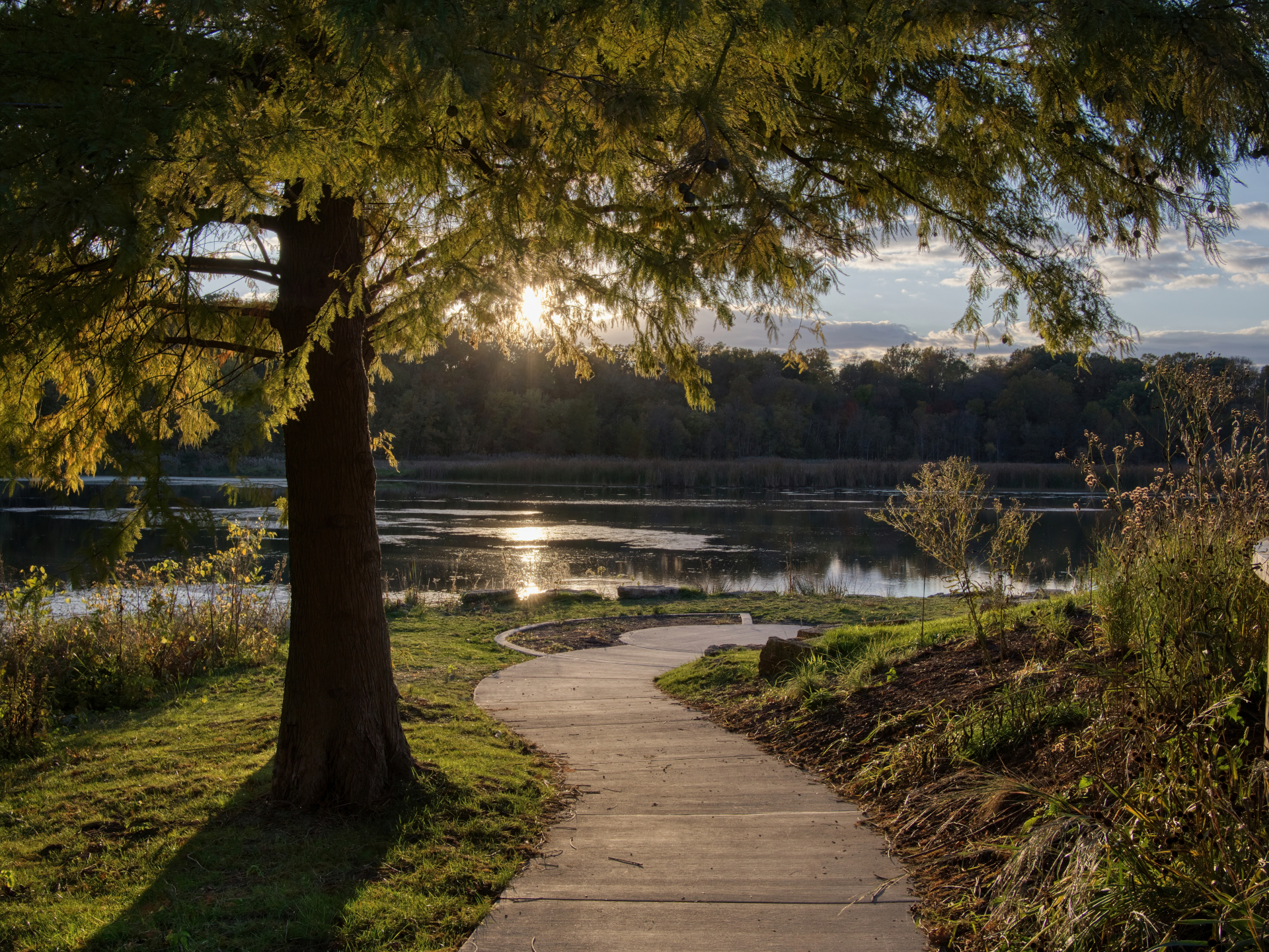
A sunset stroll along a walking path at Watershed Nature Center in Edwardsville provides beautiful views of the area’s wetlands. Photo by Roberto Valz on Shutterstock.
Greenspaces such as the Watershed Nature Center continue to proliferate in Edwardsville because the city purchases greenspaces that are either preserved as open space or developed into passive parks. These purchases are made possible through the city’s enhancement fund, which receives funding through a 0.25% sales tax. Edwardsville also is willing to close streets to make way for more parks.
If Edwardsville residents cannot be found on the Great River Road or Route 66, they are likely riding their bikes through Madison County Transit’s extensive trail system. A classic example of “rails to trails,” the system emerged as the county transformed old rail lines into bike trails as transportation patterns shifted away from rail. These trails are used not only by residents of Edwardsville and Madison County, but also by visitors, as the region has become a national destination for cyclists. In Edwardsville, the Confluence Trail overlooks the Mississippi River and reaches attractions such as the National Great Rivers Museum, the Melvin Price Locks and Dam, the Lewis and Clark Confluence Tower, and other historic sites associated with the confluence of the Mississippi and Missouri rivers.
Even Southern Illinois University Edwardsville, which brings many jobs into the city, is deeply intertwined with nature. The university has a 36-acre property containing gardens, bridges, student-designed sculptures, and walking paths.
Hensley and Arnold applaud the City of Edwardsville’s parks and recreation department for its ongoing stewardship. They point to City Park in downtown Edwardsville, which exemplifies the city’s attempts to create a destination-based community. At only 2 acres, the park is packed with shade trees and benches and is the site of the Edwardsville Public Library and the Cleaon Etzkorn Bandstand.
Hensley notes that the park hosts a full calendar of summer weekend events, with the bandstand serving as the venue for Arts in the Park activities, the Edwardsville Route 66 Festival, Opera Edwardsville performances, concerts by the Edwardsville Municipal Band and the Edwardsville Symphony, the summer Concerts in the Park series, Paws in the Park, Halloween parties, and business popups such as a Global Brew Oktoberfest.
Managing growth: A balancing act
Placemaking in the City of Edwardsville is always a balancing act. While parks and greenspaces are central to the identity of Edwardsville, so are historic areas, commercial amenities, and recreation. Edwardsville takes great care to address all of these areas in a holistic manner.
For instance, while some green areas are preserved for ecological and scenic purposes, others are transformed into sports facilities. Edwardsville prides itself on being a destination for sports enthusiasts, with facilities such as the R.P. Lumber Center, which includes an ice rink, fitness room, teen center, and community meeting space, and Plummer Family Park, an 83-acre facility that opened in August 2020.
The park contains four baseball and softball diamonds, six multipurpose fields, and 12 pickleball courts. The success of the project led to a $17 million second phase, which added four more baseball and softball fields, six beach volleyball courts, and 13 additional pickleball courts.
Elsewhere in Edwardsville, the city focuses on historic preservation in the downtown area, St. Louis Street, the Leclaire district, and more than 39 historic buildings. The history of the area is rich, including European settlement in 1805, a wood mill, a brick company, and numerous older homes.
The city has a comprehensive sign code to uphold visual integrity in these areas. For example, billboards are prohibited in the city except in the M-1 light manufacturing district, where billboards are limited to 300 square feet, must be at least 500 feet from residential districts, and may not be stacked. Dynamic signs, including digital signs, are especially regulated. The city prohibits on-premises digital signs in the downtown historic district and completely bans digital off-premises signs.
On the other side of the coin, Edwardsville welcomes commercial businesses connected by a series of highways. Despite heavy transportation needs, Edwardsville frequently collaborates with the Illinois Department of Transportation to make these areas scenic and usable. For example, the city focuses on tree plantings and obtaining grants for shared-use paths that safely connect businesses, bike trails, and pedestrians to roadways.
References
City of Edwardsville. “Plummer Family Park.” https://www.cityofedwardsville.com/508/Plummer-Family-Park
City of Edwardsville. “Route 66 in Edwardsville.” https://www.cityofedwardsville.com/742/Route-66-in-Edwardsville
City of Edwardsville. “Watershed Nature Center.” https://www.cityofedwardsville.com/Facilities/Facility/Details/Watershed-Nature-Center-14
Great Rivers & Routes. “Your Guide to the Route 66 Postcard Mural Trail.” https://www.riversandroutes.com/blog/route-66-postcard-mural-trail/
Nature Preserve Foundation. “Watershed Nature Center.” https://naturepreservefoundation.org/watershed-nature-center/
Hero image at top: Attention to heritage and clean design are evident in the look and feel of Edwardsville’s downtown area. Photo by pasa47. https://www.flickr.com/photos/53301297@N00/29708732798/, CC BY 2.0, Link.